
WHAT MUCH WAS FOR

A T R I B U T E
What Much Was For
The Journey and Legacy of Pauline Adobea Dadzawa
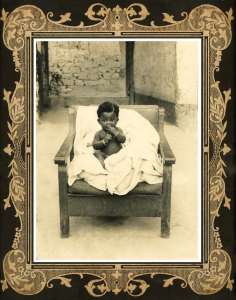
She came from little. She became much. And she never believed success was meant to be enjoyed alone.
There is a kind of success that is easy to admire: the titles, the offices, the rooms where everyone knows your name. There is a harder kind too, one that asks an uncomfortable question. Who is better off because you succeeded? That is the more interesting story of Pauline Adobea Dadzawa.
She was educated in Ghana and abroad, built a long and distinguished career, served in public institutions, trained and mentored others, raised a family, and earned the quiet respect of everyone she encountered along the way. But if all we remember is the list of positions she held, we will have missed the point. Adobea’s life was never really about how far she could go. It was about how many people she could take with her.
A CHANCE, TAKEN
Long before the titles, there was a little girl in Mepom, near Asamankese, tagging along to school at four years old, “perching,” as the family remembers it, on her older sister’s coattails. Something happened in that classroom. She thrived, consistently topped her class, and by Primary Six had passed the Common Entrance Examination into Wesley Girls’ High School.
It reads like an ordinary school story. It wasn’t. The most important thing in life is rarely the achievement itself. It is getting the chance to attempt it at all. Talent, Adobea’s story suggests, is everywhere. Opportunity is not. Perhaps because she learned that so early, she never grew indifferent to what opportunity could do for someone else.
AN APPETITE THAT NEVER CLOSED
 Her hunger for learning did not stop at Wesley Girls’. She studied Spanish in Madrid, returned to Ghana to read French, Spanish and Linguistics at the University of Ghana, then added Human Resource Management, Administration, Mediation and Conflict Transformation, and Public Sector Management to her credentials.
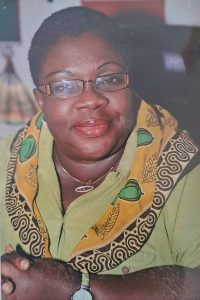 Her career moved just as widely, through education, hospitality, administration and human resources, and into public service. At Ghana Cocoa Board she rose to Director of the Quality Control Training School, then served as a Commissioner of the Electoral Commission of Ghana and later on the Public Services Commission.
It is tempting to read this as a résumé. Read it differently. Adobea kept adding capacity to herself, through new skills, new environments, bigger responsibilities, and then did something accomplished people do not always do. She spent what she had acquired on other people.
SUCCESS WAS NEVER A SOLO PROJECT
Those who knew her speak less about what she gave than about how she gave: attention, time, knowledge, relationships, and access. She noticed people. And noticing is usually where real help begins.
“If there is for one, there is for ALL.”
It sounds simple. It is actually a radical way to think about success. If one person has enough, why should another go without? If one has access, why not open the door for someone else too? Adobea did not treat what she had acquired, education, connections, and influence, as hers alone once she had it. She gave it away, freely, often before anyone asked.
She was no saint in soft focus, either. She could be bold, direct, fiercely principled and uncomfortably candid. And in the same breath she loved music and dancing, teased and laughed with the same people she would later feed and fuss over. That combination made her human: a real woman, strong-willed and big-hearted, not an idea of a good woman.
THE LEGACY SHE RAISED
Nowhere was her instinct to bring people along more visible than at home. She was fiercely protective of her four children and deliberate about their development, not just providing for them but exposing them to education, people and possibility, and pushing them to aim higher.
There is a difference between giving someone something and building someone. Adobea did both. She could meet a need in the moment, but she was just as invested in people’s capacity to stand on their own. That is why her legacy is not only in what she gave away. It is in who she helped become.
WHAT ARE WE DOING WITH WHAT WE WERE GIVEN?
This is where her story stops being just about her. Pauline had every reason to simply enjoy her own progress: modest beginnings, hard-won excellence, a career built on merit, positions of real influence. Instead she seemed to understand something many successful people learn too late. Arriving is not the end of the journey if people are still waiting behind you.
So she reached back. Taught. Mentored. Gave. Connected. She opened doors and brought people through them who might never have walked in alone. Perhaps that is the truest way to understand her legacy: not a woman who had much, but a woman who understood what much was for.
THE NEXT ADOBEA
Somewhere today, there is another little girl just as bright as Pauline was, sitting in a classroom with enormous potential and almost nothing else. Struggling parents. An under-resourced school. Ability with no one yet positioned to invest in it. We do not know her name, not yet, but we know what she needs. A chance.
That is where EBAN, The Adobea Foundation, begins. It is not an attempt to freeze Pauline in the past. It is an attempt to carry her forward: her belief in education, her instinct to help, her conviction that access for one creates a responsibility toward others. The Foundation’s SHIELD Programme, through scholarships, literacy, infrastructure and teacher development, is that philosophy put to work. The best way to honour a woman who spent her life moving people forward is not to tell stories about her generosity. It is to keep moving people forward.
A JOURNEY THAT DOES NOT END
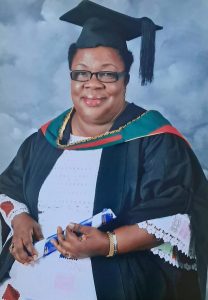
Pauline Adobea Dadzawa came from little, not nothing. She came from a family that gave her values, teachers who saw her ability, and people who opened doors along the way, and she made something of it. But the real measure of her journey is not the distance she travelled from where she started. It is how many people she sent farther because she had gone first.
She became someone, and then spent her life helping other people become someone too. Her story cannot simply live in the past tense. It is a challenge, now, to everyone who has received an education to educate, who has influence to use it well, who has resources to share, who has succeeded to reach back, who has been given a seat to make room.
Not “how far can I go?” but “who can go farther, because I went first?”
That is the journey EBAN has chosen to continue.
A life remembered. A legacy lived. A journey continued.


